 In the interest of full disclosure, we
thought we ought to say something upfront about whybother.org principles and
practices, especially for those many, but not all, first-time visitors who seem so genuinely distressed
by the "rude," "unrealistic," and fundamentally
"non-commercial" browser and download requirements
of our site, not to mention the come and go glitches as we constantly change the
thing, or the pervasive anti-information, rambling prose style that almost invariably
"buries the lead."
In the interest of full disclosure, we
thought we ought to say something upfront about whybother.org principles and
practices, especially for those many, but not all, first-time visitors who seem so genuinely distressed
by the "rude," "unrealistic," and fundamentally
"non-commercial" browser and download requirements
of our site, not to mention the come and go glitches as we constantly change the
thing, or the pervasive anti-information, rambling prose style that almost invariably
"buries the lead."
Admittedly, we’re tempted just to say, "Hey! Wake up, folks. What did you expect when you
typed ‘whybother.org’ in your browser’s address bar?" It’s not exactly a
promising name if you’re looking for just another generic, corporate MacInternet site, over 10
billion fleeced and served. But then, who admits to be looking for that? That,
nevertheless, it’s come to be the near universal expectation of Internet users
today, shaped by the forces that have dominated and commercialized Web, is very
much a factor in our "bad attitude." Why do so many otherwise
reasonable people seem to throw tantrums when those expectations, surely not
consciously their own, are even the least frustrated? Isn’t it bad enough that your word processor knows
how to spell MacDonald’s but not Gramsci?"
If you’re not tempted to follow the cryptic Gramsci link, or know well enough
who Gramsci was, consider instead that the "vision" — a suspect word if ever there were one — driving this site, affecting both its
anti-corporate media stance and aggressive technology usage, is in some sense "cyberpunk."
Or at least it’s closely
related to that long line of Sci-Fi literature and film to which belong the
stories and novels of Bruce Sterling and William Gibson, and the string of hit Sci-Fi
Noir films with which everyone is familiar, from "Blade Runner" to "The
Matrix."
Cyberpunk means a great many things to a great many people,
and there’s been a lot of discussion over the years about what it really means.
But it’s the common ground that concerns us here. Cyberpunk distinguishes itself
from other science fiction by offering a clear, compelling vision of a
future in which high-tech corporations rule the earth, using the information and bio
technologies they create to generate enormous wealth and privilege for their
owners, managers, and the relatively small class of the most essential
"knowledge workers," be they human or machine or a bit of both; and
using the very same technologies to dazzle, distract, and dominate the rest of
humanity, relegated to living in relatively or absolutely lo-tech, impoverished ghettos. In other words, the cyberpunk vision of the future is pretty much a dark
representation of the world as it is today, dressed up with a few more menacing toys.
Consider that, for
nearly half a century, the average American has been going to work or school and
coming home to consume the the rest of his or her waking hours watching TV, averaging over six
hours a day. Now, increasing numbers spend those hours and more, at home and at work, plugged
in to the commercialized Internet, in many cases
via the same AOL/Time Warner cable that delivers their TV feed. There, online,
most are herded through portals and search engines owned, controlled or
dominated by pretty much the same corporate-financial-entertainment entities providing much of the
Web’s most "popular" content, as well as almost all TV
entertainment and news, in short, nearly everything America and increasingly
the entire globe sees and hears. And if, for a "change," we
decide to "go out for the evening," it’s typically to consume more
mass media entertainment, movies or rock concerts, produced, owned, distributed,
and controlled by the same corporate financial networks from whose TV and
Internet fare we’re supposedly taking a break.
Cyberpunk is not simply science fiction. From a certain, very real point of view,
we Americans, at least, already pretty much live and die plugged into the illusory reality of The
Matrix, our labor energy crudely harvested to drive the system that keeps us
asleep in the comfortable belief that it’s not really happening or is simply
inevitable, natural, the way of the world, and perhaps relatively worth it. Not
surprisingly, the same apparatus for which we work away our lives vainly trying
to "improve ourselves" and "our position" in the face of
inescapable human mortality, daily inundates us with happy-face consumer images.
Everywhere media figures intimate or outright declare "unhappiness,"
"negativity," "stress" — all things you get if you
"think too much" — to be serious long-term physical health risks. As
if the saying "In the long run, we’ll all be dead" only applied to
dissenters and doubters.
What is to be done? If the real Matrix is indeed already everywhere, where’s
the escape, where’s the "outside"?
One possible answer is an updated version of the 17th
century Luddite response to the dawn of machine production: turn it off, drop
out, smash it, avoid all technological participation, and hide yourself, your
life, and all your activities and thoughts as far away from the Net and general
media as
possible. But the impediments to this response are at least as many today
as in the 17th century. And the central impediment is, still, that it’s
impossible to achieve purity: Luddism is always some degree of compromise with
technology and the culture it propagates.
Few of today’s many neo-Luddites pretend to be purists. The largest, most
significant group includes, according the recent estimates, nearly half the
American public, who believe they
can "take it or leave it"; that is, use the Net without getting caught
in it or by it, provided they stick, with grim determination, to antiquated machines and software, and
religiously avoid downloading or installing anything new.
But if Bill Gates is the
Great Satan in the neo-Luddite cosmogony, theirs is a peculiar kind of "half-way covenant"
with the Devil, since there’s almost no escaping some generation of Microsoft software.
Among neo-Luddite PC Windows users, surely by definition in league with the
Devil from the get-go, this half-way covenant gives rise to perhaps the most curious of
contemporary retrograde delusions: "Windows 98 is safer than Windows 2000,
Windows95 even
better than that, and Windows 3.1 was wonderful. If only we weren’t forced to do
without DOS….."
Take it from someone who’s been around that long: any notion that DOS, Windows 3.1 and Windows 95, at least, weren’t every bit as
buggy and awful as Macheads said they were at the time is simply
ludicrous. The only thing buggier than new Microsoft software is old
Microsoft software. Better a real Luddite purist,
retiring completely to paper and pencil, than this sort who defend their
imaginary distance, immunity, and indifference to the Evil of the Net on a moving treadmill
of inevitable technological purchases, gifts, and even finds on the scrap heap.
There is simply no such thing as sticking to old technology. "Old
technology" is a purely relative term.
And the pace of development is such that what counts as little more than a desk anchor today was a
server node driving the Net only five years ago. Come the day after tomorrow,
the antiquated safeguards of the half-way covenant crowd will be more powerful and capable than anything
on the market today.
It’s not that cyberpunk science fiction doesn’t occasionally dream of a
Luddite "Return to the Garden of Eden" solution, but that its basic
vision of the future precludes this possibility. There is nowhere to hide; or,
more complicated, "hiding" depends on using rather than refusing
technology. And it is here that the general cyberpunk vision gets interesting, because
"hiding" as a form of resistance becomes more than a matter of
disguising yourself in the conventional sense of a fake identity. The act of
"hiding" becomes a political and cultural agenda. Of necessity,
"hiding" becomes an effort, individual and collective, to reopen a noisy and confusing
public "free zone" within which it might again be possible to stand without
concealment, because the cost/benefit ratio of tracking so many individuals in
the chaos is too great even for the technological powers that be.
This effort is necessarily a continuous one, for the same reason that the
neo-Luddite half-way covenant is delusory: the technological capabilities available to "the
system" continue to increase, exponentially, through time. The effort to
endlessly recreate a public "free zone" may seem daunting in this
light, but no more so than the individual and collective effort always required, since the
beginning of human history, to gain or regain any other basic human right or
freedom. Only the toys have changed; the essential game of domination,
submission or resistance remains the same.
So whybother.org? Why the heavy download requirements? Why the pervasive and
almost exclusive use of "Evil Empire" technologies? Why not a "more
democratic" site accessible to old browsers and older machines?
In the game, as we are forced to play it today, there are no easy choices,
and many strategies have at least plausible validity. Particularly respectable
is the vast, varied Linux/Apache/Mozilla/Open Source movement, although that
movement, at the moment, is largely crippled by the media-fanned belief that
Microsoft is "The Great Satan," the exclusive source of evil in the
digital world. Related and equally crippling are various rationalizations of convenience that disparage
web-based multimedia in favor of almost pure textual information delivery, at
root because the work to develop truly fast, capable multimedia subsystems,
drivers, graphical interfaces, etc. is very difficult and never done. The two,
combined, tend to bubble up a truly weird ideological brew of elitist neo-Luddites,
who look down on Windows and MAC slaves, while proving their anarchistic
independence from the digital corporate world by plugging their archaic Linux
boxes into AOL/TimeWarner cable feed. In other words, their radicalism extends only as far that special wall of their homebuilt cubicles, the one the
mega-media giant’s cable comes in.
In contrast, our whybother assumption is there is no purity to be had in the
digital world. We, the people, will forever be cobbling together hardware,
software and networking capabilities in the wake of a corporate created and
dominated cutting edge. And Microsoft’s leavings, the debris it scatters far and
wide in its drive toward world domination, including, very importantly, its
unmatched level of online developer documentation and resource kits, are as good
if not better pickings as any other. Never mind that it doesn’t do what it
claims to do. It’s simply good gomi for digital dumpster divers, almost
as good as it gets.
And the fact is we’ve all paid for it already.
Microsoft R & D and its worlds within worlds of "freely" available
online materials are not driven by venture and IPO capitalization but by money
we’ve spent over the years on operating and office systems. Where’s the virtue
in not using it all to other ends than picking up the pace of "productivity
growth," a.k.a., firing people no longer needed to produce a profit at a
given sales volume? And why not use the "free stuff" before we’re charged for it, again, in the next
new computer or software upgrade we purchase? Why wait? All it takes is a bit of
downloading, and a bit of machine maintenance…. Dive right in.
As Hamlet says, "Ay, there’s the rub." Both the Open Source
movement and the whybother Imperial-parasite approach, which seem so
antithetical, actually share a common cyberpunk premise, which in the end is
much more important than any difference. Users must be active users.
More specifically, the line between users and developers
must be blurred, again in the future as it was once upon a time during the
Internet’s early years. Independent users, like independent developers, must be aggressive
deployers of whatever technology is freely or cheaply available. If not, if the
general user population remains what it has become through the commercial hype of the Net as a finished thing, a
ready-for-use "information superhighway" or, worse, "supermall",
if users remain in their allotted role of passive consumers of point-and-click digital "experiences," then there is no
hope the Net will ever rise to be anything other than yet another media of mass
population pacification and control. The Net will remain The Matrix, the means
by which the mass media of the early twentieth century are ever more accurately
and effectively targeted, refined, and falsely "individualized" in the twenty-first century.
The difference between an active and a passive user is the difference between
being a user and simply being used, fodder for the global high-tech, mass
media-whipped production-consumption machine that’s literally eating our planet
alive. In the technology game we’re all forced to play today, there is not much
middle ground.
That, and nothing more, is our "Bad Attitude."
Thanks for embracing our aggressive technology requirements at least this
far. Keep going. Learn to maintain your machine, with and without spending more
money. Help others to do the same. And above all take the time to
search out other sites like this one, outside the corporate media mainstream,
that will enable you to exploit further and in other ways the truly marvelous
potential of the powerful machine, however old, that is even now at your finger
tips.
A CPU is a terrible thing to waste….
 You know, for the past twenty-five years, I’ve always had a sense that American management was composed mostly of those from our parents’ generation, but it now seems that today American management is composed of those from Gen-X. How was it possible, that we, the baby boom generation, the largest generation in American history, were cut loose from our fair share of controlling destiny?
 After a lovely Saturday with improv, a party in Tiburon, and stuff, I stopped at the Alexandria to see the 10:30 PM showing of Mission To Mars. The reviews were all in the three star category, even if the reviewers had a maximum of 3, 4, 5, or 10 stars. Most critics faulted the plot as being too cheesy–a word that is used all over the place, but whose definition escapes me and can be best described as a phrase GenXers use to say, “I’m in my twenties and I don’t like this.” The story is of astronauts venturing to Mars only to discover a message from the planet’s previous tenants regarding the beginning of their extinction and Earth’s beginning of its evolution.
 I just finished reading each and every page of the 918-page novel, Cryptonomicon, written by Neal Stephenson. Attracted by its description of being a novel of World War Two code breaking, encouraged by positive reviews from the NY Times pasted on the cover and printed on the review insert page, and feeding an obsessive compulsion to read things about math and war, I bought a copy at Cody’s in Berkeley, and was further propelled by the sales clerk who said he had recently finished the book and it was great. My summertime reading was going to be hip.


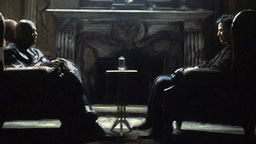 This is not so much about places as it is about places in film, on video, TV, in photographs, print, books and magazines. It is about the vast difference between the places in which we live, can live and do live, and the places, sometimes the same places, that are represented to us in Hollywood mass media.
 As I sit down to write this, the Office of President of the United States of
America seems to dangle from the fingertips of the unelected members of the Florida State Supreme Court. You, reading this presumably after their decision, know much more than I.
As I sit down to write this, the Office of President of the United States of
America seems to dangle from the fingertips of the unelected members of the Florida State Supreme Court. You, reading this presumably after their decision, know much more than I. A few years ago, back in ancient times when the Internet was still talked about in excited tones as "The New Media" soon to render all others obsolete, Disney CEO Michael Eisner was interviewed about Disney’s prospects in a "Max Headroom" kind of future in which the technology to produce and distribute quality film and TV is both universally available and universally affordable. Eisner’s confident answer, which cut to the heart of the entire entertainment industry, not just film and TV, was that Disney’s business was not creating media products–films, television shows, music, magazines–but "killer copyrights."